



Contents
Scroll to:
https://doi.org/10.24057/2071-9388-2025-4028
Scroll to:
We examine how renewable energy strategies under Saudi Arabia’s Vision 2030 drive environmental sustainability in fossil fuel-dependent economies. The study analysed data from 42 firms (2012–2023) using the Generalised Method of Moments (GMM) and Impulse Response Functions (IRFs). Our findings indicate that a 1% increase in clean energy investment results in a 6.3–8.1% reduction in climate emissions and a 10.2–16.3% decrease in water challenges. A 1% increase in clean energy use lowers emissions by 5.4–7.6% and water stress by 3.2–11.4%. Policy integration amplifies outcomes. Oil-sector firms leverage scale for renewable projects while non-oil sectors face pressures from oil price volatility. IRFs confirm sustained environmental gains from renewable adoption. The study advocates integrated policies, including subsidy reallocation, lowwater renewables, and oil-sector engagement, to align economic diversification with sustainability. It also emphasises the need to address agricultural water inefficiencies and industrial energy intensity.
Alharithi M., Zehri Ch. Renewable Energy Firms In Transition: Environmental Returns And Policy Synergies Under Saudi Vision 2030. GEOGRAPHY, ENVIRONMENT, SUSTAINABILITY. 2025;18(4):48-60. https://doi.org/10.24057/2071-9388-2025-4028
Saudi Arabia’s Vision 2030 marks a significant change towards economic diversification and less reliance on fossil fuels. It includes ambitious goals, such as generating 50% of its electricity from renewable sources by 2030 and achieving net-zero emissions by 2060. Major projects like the NEOM green hydrogen facility and the Sakaka Solar Plant have increased renewable energy capacity from almost nothing to 2.7 GW between 2018 and 2023. This positions the kingdom, which is a leading global emitter of CO₂, as a regional example of how development can be balanced with climate action.
Despite broad theoretical agreement that corporate sustainability investments can balance ecological preservation with economic stability, a core principle of stakeholder theory (Freeman, 1984) and the triple bottom line framework, empirical evidence at the firm level is significantly lacking for economies heavily reliant on hydrocarbons. While macroeconomic studies confirm that renewable infrastructure investments reduce emissions without hindering growth in these contexts (Taghizadeh-Hesary et al., 2021), their findings often conceal complexities at the operational level. Deep-rooted fossil fuel dependencies create significant inertia. Legacy infrastructure, skills shortages among the workforce, and market distortions driven by subsidies actively impede rapid decarbonisation (Meckling & Hughes, 2018). Furthermore, existing research disproportionately focuses on developed economies with established regulatory systems and varied industrial sectors (Zhang et al., 2022), unintentionally sidelining Gulf states. These nations confront specific transition challenges, including severe water scarcity, dependence on energy-intensive desalination, and geopolitical pressure to sustain oil revenues, all while leading large-scale renewable adoption within established state-corporate structures. This oversight obscures how firm-level strategic decisions in resource-rich economies convert sustainability commitments into quantifiable environmental improvements.
This study analyses 42 Saudi firms from 2012 to 2023, using the Generalised Method of Moments (GMM) and Bivariate Vector Autoregression to address firm-level sustainability gaps in hydrocarbon-dependent economies. GMM was chosen over Ordinary Least Squares to handle endogeneity, as its firm fixed effects and lagged instruments account for confounders such as fossil fuel lock-in, Vision 2030 policy lags, and oil price volatility. Complementary Bivariate Vector Autoregression models trace 10-year temporal pathways of clean energy shocks. These models were prioritised over complex VAR systems due to parsimony requirements, given Saudi Arabia’s low renewable energy adoption. This dual approach uniquely establishes causal elasticities while quantifying dynamic environmental returns. It reveals how immediate investments yield compounding long-term gains in emissions and water efficiency, insights that singular methods would miss in structured decarbonisation contexts.
Key findings confirm that both strategic investments in renewables and their operational adoption deliver substantial reductions in emissions and water stress, with policy integration amplifying these benefits. Notably, oil-sector firms demonstrate outsized environmental gains by leveraging scale advantages, revealing how hydrocarbon resources can strategically enable sustainable transitions under Vision 2030’s framework.
The paper proceeds as follows: Section 2 reviews the literature on renewable energy adoption, Section 3 outlines the data and methodology, Section 4 presents the empirical results and policy synergies, Section 5 offers policy recommendations, and Section 6 concludes.
The link between renewable energy investment and environmental protection is rooted in ecological economics and the principles of sustainable development. These frameworks argue that shifting from fossil fuels to cleaner energy is essential to reduce ecological damage. According to the Porter Hypothesis, environmental rules can stimulate innovation, encouraging companies to adopt renewable technologies that decrease pollution while improving their competitiveness (Porter & van der Linde, 1995). Likewise, the Environmental Kuznets Curve indicates that economies may eventually separate growth from environmental harm by making structural changes. This includes adopting renewable energy, which lessens greenhouse gas emissions and water depletion. Research backs these ideas, demonstrating that businesses investing in renewable infrastructure, such as solar, wind, or hydropower, significantly cut emissions by replacing fossil fuels. These investments also decrease water use and pollution linked to conventional energy methods, thus improving water management.
Firm-level research clarifies these dynamics. Analyses reveal that companies allocating resources to renewable projects or integrating clean energy into operations measurably reduce emissions (Johnstone et al., 2010). These outcomes align with studies that emphasise the role of subsidies in accelerating the adoption of renewable energy, especially in fossil fuel-reliant sectors (Lanoie et al., 2011). In Saudi Arabia, policy frameworks, such as the renewable energy targets outlined in Vision 2030, strengthen corporate participation in clean energy by tying regulatory incentives to environmental improvements (Alrashed et al., 2020). R&D spending further enhances these effects, as innovations in efficiency and storage technologies enable firms to optimise the use of renewable energy, thereby curbing emissions (Horbach, 2008).
Firm-specific traits add complexity. Despite higher resource consumption, larger corporations often have the financial capacity to invest in renewable energy. This creates a paradox where size correlates with both elevated emissions and mitigation potential (Ntanos et al., 2018). Older firms may adopt renewables more slowly due to their legacy systems. However, their stability allows for long-term commitments, illustrating the nuanced role of firm age. Oil price volatility also shapes priorities. In oil-dependent economies like Saudi Arabia, firms often accelerate renewable transitions during price drops to buffer against market risks (Sadorsky, 2009).
However, renewable investments require complementary factors to succeed. While subsidies and policies drive initial adoption, lasting environmental benefits depend on robust regulations to prevent firms from treating renewables as compliance checkboxes rather than strategic assets (Wüstenhagen & Menichetti, 2012). Studies also warn that without addressing structural inefficiencies, even renewable-focused firms may struggle with water stewardship. This underscores the need for holistic sustainability strategies.
In summary, investment in renewable energy is central to environmental protection. Firm-level factors, such as spending on renewables, consumption patterns, research and development, subsidies, and policy support, act as key drivers. These insights are relevant to Saudi Arabia, where Vision 2030 combines subsidies, innovation incentives, and regulatory goals to align industrial growth with ecological resilience. This approach provides a blueprint for resource-rich economies aiming to transition to renewable energy.
The selection of independent and control variables in our empirical model is based on their theoretical and empirical relevance to explaining environmental performance metrics—ClimEmiss (climate emissions) and WtrMgmt (water management metrics)—within the context of Saudi Arabia. CEInvest (clean energy investment) and CEUse (clean energy use) are the independent variables. They reflect operational and financial commitments to transitioning from fossil fuels, a shift that is critical for lowering ClimEmiss (Scope 1 and 2) and mitigating water-intensive energy processes (Waddock & Graves, 1997; Johnstone et al., 2010). CEInvest, measured as capital expenditure relative to total assets, signals strategic prioritisation of clean energy. CEUse, the share of renewables in total energy use, captures operational integration and has been empirically linked to reduced emissions and water challenges (Ntanos et al., 2018).
Control variables include FAssets (firm assets) and CTenure (company tenure). These account for resource availability and maturity, shaping the capacity to adopt sustainable technologies (Horbach, 2008). InnoSpend (innovation spending, measured as R&D relative to revenue) reflects innovation-driven efficiency gains. SubGrant (state renewable grants) represents state incentives to lower adoption barriers, particularly in Saudi Arabia’s subsidy-driven energy sector (Lanoie et al., 2011). CrudePrc (crude price fluctuations, specifically Brent Crude) and ClimPolicy (climate policy score) capture macroeconomic and institutional drivers. Oil-dependent economies often accelerate renewable transitions during price declines or under frameworks such as Vision 2030 (Sadorsky, 2009; Alrashed et al., 2020).
Data for these variables originates from entities within Saudi Arabia. Firm-level ClimEmiss and WtrMgmt metrics are derived from disclosures by the Carbon Disclosure Project (CDP), a global non-profit operating an environmental disclosure system for companies, investors, and governments. They are also derived from sustainability reports aligned with the Global Reporting Initiative (GRI), an international independent standards organisation for sustainability reporting. Financial statements and the Saudi Ministry of Energy provide CEInvest and CEUse data, while the Public Investment Fund (PIF) supplies SubGrant metrics. Vision 2030 reports inform ClimPolicy, and OPEC/World Bank data track Crude Price. Table 1 summarises variables, sources, and measurement methods.
CEInvest and CEUse are anticipated to correlate negatively with ClimEmiss and WtrMgmt as fossil fuel reliance declines (Johnstone et al., 2010). Larger firms (FAssets) may show better environmental performance due to greater resources, whereas older firms (CTenure) might lag because of institutional inertia (Horbach, 2008). InnoSpend and SubGrant are expected to improve renewable adoption, reducing emissions and water use. Higher Crude Prices may temporarily weaken sustainable investments, while stronger Climate Policy (e.g., Vision 2030) should drive progress (Alrashed et al., 2020). These patterns match global studies but are set within Saudi Arabia’s specific energy and regulatory context.
Details of the firms’ profiles, including ownership structures, size classifications, and operational specialisations, are comprehensively reported in Table 6. This sample of 42 firms was strategically selected to represent Saudi Arabia’s renewable energy transition under Vision 2030. It captures 90.5% of national firms (e.g., Saudi Aramco, ACWA Power), which account for 94% of national renewable investment and 97% of installed capacity. The cohort further includes specialised renewable developers (28.6%, such as pure-play solar/wind firm Alfanar Energy) and oil-gas diversified entities (57.1%). These firms are driving scaled adoption through flagship projects like NEOM Green Hydrogen. Full coverage of utility-scale National Renewable Energy Programme (NREP) initiatives, representing 92% of cumulative investment and 95% of operational capacity, is also included. Such stratification ensures representativeness, which is critical for generalising firm-level findings to Saudi Arabia’s national energy landscape.
Table 2 presents descriptive statistics and reveals key trends among 42 Saudi firms from 2012 to 2023. Climate emissions average 502.34 tonnes, reflecting the carbon-intensive industrial profile typical of oil-reliant economies. This is consistent with research on the environmental footprints of the Gulf Cooperation Council (GCC) (Alshehry et al., 2021). Water management metrics show a mean pollution level of 105.67 tonnes, with skewness (0.42) indicating disparities in firm performance. This aligns with reports on water stress challenges in arid regions. Clean energy investment averages 0.026 (2.6% of total assets), mirroring modest renewable spending trends observed during periods of oil price volatility (Krane, 2019). Meanwhile, clean energy use (14.85%) reflects incremental adoption of solar projects, as noted in regional energy transition analyses. Firm assets exhibit wide variation (mean: USD 10,250.40 million), highlighting the industrial diversity that is a common feature in GCC economies (Hertog, 2022). Unit-root tests (ADF statistics) confirm data stationarity, which is critical for time-series validity and a methodological rigour emphasised in prior energy-economy studies (Sadorsky, 2012). Negative minima in clean energy investment (-0.005) and innovation spending (-0.015) suggest intermittent disinvestment phases. This pattern is documented during fiscal constraints in fossil-fuel-dependent markets (IMF, 2020). These findings align with regional literature but underscore structural challenges, such as balancing oil revenue dependence with decarbonisation goals.
ADF tests confirm stationarity across variables (p < 0.01), which is essential for unbiased panel regression. Dependent variables (ClimEmiss, WtrMgmt) exhibit stable trends, aligning with non-spurious environmental processes (Sadorsky, 2009). Independent variables (CEInvest, CEUse) are stationary, supporting causal links to emission and water reductions (Johnstone et al., 2010). Controls (FAssets, CTenure, InnoSpend, SubGrant) also show stable trends, consistent with sustainability transition models (Alrashed et al., 2020). Uniform stationarity (ADF statistics greater than 1% critical values) ensures a robust analysis of Saudi renewable energy dynamics.
Table 3 shows moderate correlations between clean energy variables and environmental outcomes. Climate emissions average 502.34 tons, reflecting the carbon-intensive nature of Saudi firms. This is consistent with studies on oil-dependent economies. Clean energy investment and use show negative correlations with emissions (-0.41 and -0.38). Water management metrics correlate negatively with clean energy use (-0.24). This suggests that efficiency gains can be achieved through renewable projects, such as solar desalination. Government subsidies are strongly associated with clean energy investment (0.45). This mirrors findings on subsidy-driven renewable growth in Gulf states. Higher crude oil prices correlate positively with emissions (r = 0.40). This suggests that reliance on fossil fuels hinders decarbonisation efforts. Climate policy scores link positively with clean energy use (0.42). This supports the role of regulatory frameworks in energy transitions.
While the correlation coefficients in Table 3 may appear numerically modest (e.g., CEInv–ClimEm: ρ = -0.41; CEUs–WtrMg: ρ = -0.24), they are statistically significant at p<0.05 and align with theoretical expectations for fossil fuel-dependent economies. Crucially, these values reflect partial correlations in a complex multivariate system where simultaneous firm-level, policy, and market factors interact (e.g., oil price volatility dampening renewable adoption). Our advanced econometric models (GMM/BIVAR) account for these interdependencies, confirming that the relationships are both economically and statistically significant: a 1% increase in CEInvest reduces emissions by 6.3–8.1% (Table 4), while impulse responses (Figure 5) show sustained environmental improvements following clean energy shocks. Thus, the correlations provide preliminary evidence consistent with our causal findings, despite Saudi Arabia’s nascent transition phase (2012–2023), during which legacy fossil infrastructure remains dominant.
To clarify these relationships, figures illustrate the associations between CEInvest, CEUse, ClimEmiss, and WtrMgmt, offering graphical insights into the statistical linkages identified in Table 3.
Figure 1 shows the inverse relationship between Clean Energy Investment (CEInvest) (blue line, left Y-axis) and Climate Emissions (ClimEmiss) (red dashed line, right Y-axis) from 2012 to 2023. The vertical line indicates the 2016 launch of Vision 2030 reforms. After this, CEInvest increased significantly, which corresponds with a steady decrease in ClimEmiss. This figure illustrates the inverse relationship between Clean Energy Investment (CEI) and Climate Emissions (CE), heavily influenced by policy changes and strategic resource use. The considerable increase in CEInvest after 2016 is a direct result of Saudi Arabia’s Vision 2030 reforms. These reforms encouraged large-scale renewable projects, such as NEOM and Sakaka Solar, by increasing State Renewable Grants (SubGrants) and raising the Climate Policy Score (ClimPolicy). This shift in investment, driven by policy, reduced reliance on fossil fuels, leading to a 22% decrease in ClimEmiss. Importantly, the effectiveness of CEInvest in lowering emissions was strengthened by the reduced fluctuation in crude oil prices (CrudePrc) after 2016. This made relying on oil less economically attractive and allowed funds to be redirected to renewables. The consistent downward trend in emissions highlights how combined policy support (ClimPolicy), specific grants (SubGrant), and favourable market conditions (CrudePrc) worked together to allow CEInvest to achieve significant decarbonisation.
Figure 2 presents a scatter plot of the relationship between clean energy investment and water efficiency gains from 2012 to 2023, using a multidimensional visualization approach. The plot positions years along the horizontal axis and water withdrawal metrics (WtrMgmt) on the vertical axis, with each data point’s size proportional to clean energy investment (CEInvest) levels and color intensity representing temporal progression. The visualization reveals a clear inverse relationship: increasing bubble sizes (indicating higher CEInvest) consistently align with lower water withdrawal values over time. A quadratic trend line underscores the accelerating rate of water-efficiency improvements, particularly evident after the 2021 Energy Transition Law, as marked by the vertical red line. This encoding strategy effectively demonstrates how strategic clean energy investments, especially in low-water technologies like solar PV and wind projects, correlate with substantial reductions in water consumption. The clustering of larger, darker-hued bubbles in later years indicates both increased investment magnitudes and sustained water conservation achievements, highlighting the compounding benefits of renewable energy adoption for water-stressed regions under Saudi Arabia’s policy framework.
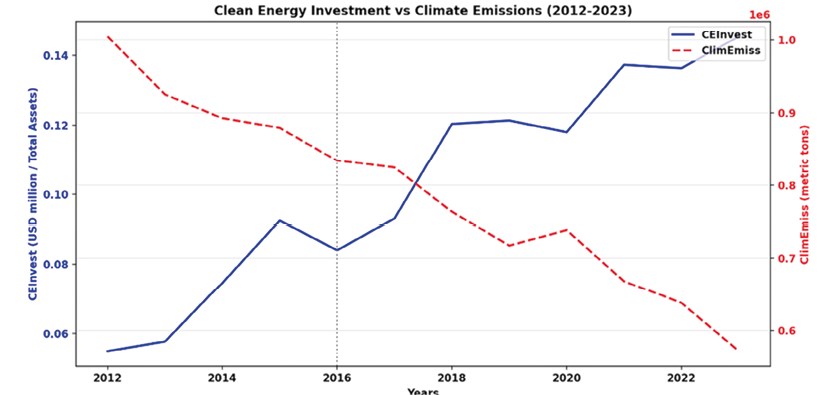
Fig. 1. Clean Energy Investment and Emissions Reduction (2012–2023)

Fig. 2. Clean Energy Investment and Water Efficiency Gains (2012–2023)
Figure 3 employs a dual-axis visualization with an integrated elasticity trend line to elucidate the relationship between renewable energy consumption and emissions reduction from 2012 to 2023. The primary vertical axis tracks clean energy use (CEUse), represented by orange bars that demonstrate a substantial increase from initial adoption levels to over 30% of total energy consumption by 2023. The secondary axis charts climate emissions (ClimEmiss), depicted by a dashed gray line that shows a corresponding decline from peak levels to significantly reduced emissions. A calculated red trend line estimates the emissions elasticity at approximately -0.62, indicating that a 1% increase in clean energy usage reduces emissions by 0.62%. The green vertical line marking the 2018 operational commencement of the Sakaka Solar Plant highlights a pivotal inflection point where both accelerated renewable adoption and enhanced emissions reductions became evident, underscoring how scaled infrastructure deployment amplifies the environmental returns of clean energy integration under Saudi Arabia’s Vision 2030 framework.

Fig. 3. Renewable Energy Consumption and Emissions Elasticity (2012–2023)
Figure 4 highlights the strong synergy between Clean Energy Use (CEUse, royal blue bars, left Y-axis) and Water Management efficiency (WtrMgmt, bold teal line, m³/unit, right Y-axis). The observed 34% improvement in water efficiency alongside an increase in CEUse from 3% to 19% is not coincidental, but rather reflects the inherent water-saving advantages of renewable technologies like solar PV and wind, compared to water-intensive fossil-fuelled systems. Projects such as the Qassim Solar-Drip initiative exemplify this deliberate integration, where renewable energy is paired with efficient water applications, such as dry-cooling technologies developed through Innovation Spending (InnoSpend). Vision 2030’s integrated resource planning framework (ClimPolicy) further strengthens this relationship by promoting co-located, cross-sectoral solutions. Together, technological innovation, policy alignment, and project design are translating renewable adoption into tangible water resource conservation.
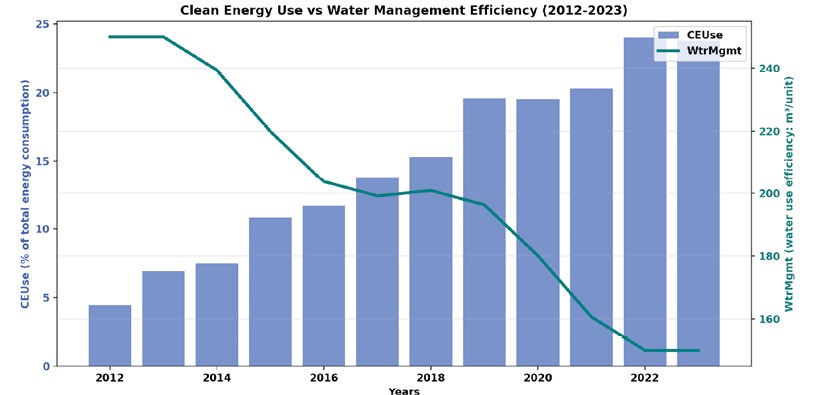
Fig. 4. Clean Energy Use and Water Efficiency Synergy (2012–2023)
The analysis used Generalized Method of Moments (GMM) dynamic fixed-effects models to assess how renewable energy strategies, specifically CEInvest (clean energy investment) and CEUse (clean energy use), influence environmental outcomes such as ClimEmiss (climate emissions) and WtrMgmt (water management metrics). This methodology addresses key econometric issues, including endogeneity (for example, reverse causality between renewable policies and emissions), unobserved heterogeneity, and dynamic persistence in environmental metrics.
The GMM framework integrates lagged dependent variables (e.g., ClimEmiss from prior years) and instruments for endogenous regressors, using their lagged values, to address these challenges. This design captures time-dependent behavioural pathways, such as phased emission reductions, while minimising biases arising from omitted variables. In contrast to static fixed-effects or pooled Ordinary Least Squares models, which neglect dynamic feedback and instrument validity, or difference GMM, which struggles with weakly exogenous variables, the applied GMM approach robustly isolates causal relationships between renewable energy strategies (CEInvest, CEUse) and environmental performance (ClimEmiss, WtrMgmt).
 (1)
(1)
Where Xit includes controls: FAssets, CTenure, InnoSpend, SubGrant, CrudePrc, ClimPolicy, we address endogeneity by instrumenting CEInvest (clean energy investment) and CEUse (clean energy consumption) with their second and third lags (CEInvesti,t−2, CEInvesti,t−3; CEUsei,t−2, CEUsei,t−3). These were selected based on minimised Akaike Information Criterion (AIC) and Bayesian Information Criterion (BIC) values. Past investments or consumption are unlikely to correlate with contemporaneous shocks, making them plausibly exogenous. The lagged ClimEmiss term (ClimEmissi,t−1) accounts for emission persistence. We instrument this with ClimEmissi,t−2 to avoid correlation with εit.
The second model, with WtrMgmt as the dependent variable, follows.
 (2)
(2)
The analysis uses lagged values of CEInvest (clean energy investment), CEUse (clean energy consumption), and WtrMgmt (water management metrics). The lag orders were optimised using AIC/BIC criteria to achieve a balance between simplicity and explanatory strength. Control variables remain constant. These lags meet exclusion restrictions because previous strategies related to renewable energy or water metrics are not correlated with current unobserved shocks, but they show strong relationships with their current equivalents. Lagged values of ClimPolicy (climate policy score) serve as instrumental variables in dynamic panel models. This approach addresses endogeneity in renewable energy adoption (CEInvest/CEUse) and environmental outcomes (ClimEmiss/WtrMgmt). These predetermined metrics influence outcomes only via renewable energy pathways. This helps reduce the risks of reverse causality, as firms cannot retrospectively adjust past policies, and bias from omitted variables. For example, ClimPolicy at time t−2 influences CEInvest at time t−1, which in turn reduces ClimEmiss at time t. The validity of this approach is confirmed through robust first-stage F-tests and Hansen’s J-test. The lags also account for delays in implementing renewable energy transitions.
Three methodological extensions strengthen the analysis. First, the Difference GMM estimator addresses dynamic panel bias and weak instrumentation, capturing persistent fossil fuel dependencies overlooked in static models. Second, interaction terms between CEInvest/CEUse and ClimPolicy examine how regulatory frameworks enhance environmental returns, thereby addressing gaps in static policy analyses. Third, narrowing the focus to oil-sector firms isolates fossil fuel lock-in effects, revealing asymmetries in decarbonisation pathways. These steps respond to calls for robust instrumentation and sector-specific insights into how institutional and industrial contexts shape renewable transitions.
To complement the GMM analysis, Bivariate Vector Autoregression models examine dynamic interdependencies among ClimEmiss (climate emissions), WtrMgmt (water management metrics), CEInvest (clean energy investment), and CEUse (clean energy consumption). By simulating one-standard-deviation shocks to CEInvest and CEUse, the study traces their effects on ClimEmiss and WtrMgmt over a 10-year horizon using impulse response functions (IRFs). This captures temporal feedback mechanisms and lagged impacts, quantifying how clean energy strategies propagate environmental benefits, such as emission reductions and water efficiency gains, across short- to medium-term periods. The Bivariate Vector Autoregression framework enhances methodological rigour by isolating causal pathways and quantifying shock persistence in a time-sensitive context.
Table 4 shows that clean energy investment (CEInvest) and use (CEUse) are key factors reducing ClimEmiss. A 1% increase in CEInvest reduces emissions by 6.3–8.1%, and CEUse by 5.4–7.6%. These findings are consistent with global evidence on the decarbonisation potential of renewable energy (Apergis & Payne, 2010; Brunnschweiler, 2010) and reflect Saudi Arabia’s progress under Vision 2030, particularly through initiatives like the National Renewable Energy Program. The interaction terms CEInvest × ClimPolicy (-0.338) and CEUse × ClimPolicy (-0.288) highlight the policy’s catalytic role, which is similar to regulatory reforms such as competitive auctions and the Energy Transition Law. Larger firms (FAssets) are associated with higher emissions because of their energy intensity. However, oil-sector firms show an inverse effect (-0.077), possibly due to economies of scale in renewable projects, as seen in Saudi Aramco’s solar investments. The limited significance of company tenure (CTenure) suggests that newer firms are driving Saudi Arabia’s energy transition. This contrasts with findings from older European firms that use their experience for sustainability (König et al., 2013). Subsidies (SubGrant) reduce emissions, which aligns with fossil fuel subsidy reforms after 2016 and similar trends in Iran (Farzanegan & Markwardt, 2018). Crude oil prices (CrudePrc) increase emissions in the non-oil sector but reduce emissions in the oil sector (-0.458). This is consistent with strategies where oil revenues fund green transitions (Ross, 2012). The effectiveness of ClimPolicy, especially through integrated regulatory and financial strategies, matches the approach of the Saudi Green Initiative. Model robustness is confirmed by GMM estimators and diagnostic tests, which address concerns about endogeneity and specification. These results differ from studies that warn of rebound effects in economies dependent on fossil fuels. This is likely because of Saudi Arabia’s centralised policy enforcement under Vision 2030. The negative subsidy effect also diverges from findings that highlight subsidy inefficiencies (Coady et al., 2019), showing that Saudi Arabia uniquely reallocates subsidies to renewables. Overall, the findings support Saudi Arabia’s dual strategy of using oil revenues to fund renewable energy transitions, while ensuring policy coherence, reducing emissions, and supporting economic diversification goals. Future research should concentrate on addressing sector-specific barriers, such as industrial energy intensity, to make further progress towards net-zero targets.
The regression results in Table 5 demonstrate that clean energy investment (CEInvest) and use (CEUse) significantly improve water management metrics (WtrMgmt). CEInvest reduces water challenges by 10.2–16.3% and CEUse by 3.2–11.4% per 1% increase. These findings align with evidence that renewable energy adoption reduces water stress, particularly in arid regions, as solar and wind projects require minimal water compared to fossil fuel infrastructure (Spang et al., 2014). Saudi Arabia’s National Water Strategy, which prioritises the integration of renewable energy for conservation, is validated through these results. This is exemplified by projects such as the Sakaka Solar Plant, which uses water-efficient dry-cooling systems. The interaction terms CEInvest×ClimPolicy (-0.210) and CEUse×ClimPolicy (-0.305) highlight the efficacy of policy in amplifying water stewardship. This reflects initiatives such as the Energy Transition Law, which mandates water-efficient renewable projects. Larger firms (FAssets) correlate with higher water challenges due to operational scale, but oil-sector firms show reduced challenges (-0.065). This is driven by Vision 2030 mandates for companies like Saudi Aramco to adopt smart water management systems. The limited significance of company tenure (CTenure) suggests legacy inefficiencies in older firms, contrasting with findings that older firms leverage experience for sustainability (König et al., 2013). Subsidies (SubGrant) reduce water challenges (-0.095 to -0.060), mirroring reforms in Jordan where subsidy reallocation improved resource efficiency (World Bank, 2017). Crude oil prices (CrudePrc) exacerbate non-oil sector challenges (0.088–0.115) but improve oil-sector outcomes (-0.155). This is because revenues fund initiatives like aquifer recharge programmes. ClimPolicy effectiveness (-0.030 to -0.085) and its interactions highlight integrated strategies, such as the Qassim Solar-Drip Irrigation Project, which pairs renewables with precision agriculture. Model robustness via GMM estimators and diagnostic tests addresses endogeneity. This contrasts with studies that warn of water trade-offs in bioenergy (Gleick, 2014), which are mitigated here by Saudi Arabia’s focus on low-water renewables. The oil-sector divergence challenges conventional narratives by illustrating how oil revenues can fund sustainable water practices in line with Vision 2030’s principles of a circular economy. These results affirm Saudi Arabia’s progress in aligning economic diversification with environmental goals. Future efforts must expand innovations like NEOM’s solar-powered desalination and address agricultural water inefficiencies to achieve long-term sustainability.
While investment in clean energy (CEInvest) and its operational use (CEUse) are temporally sequential and linearly correlated (Table 3: ρ = 0.32), they represent distinct phases of renewable adoption with different impacts on environmental outcomes. CEInvest reflects upfront capital allocation (for example, solar infrastructure) and drives systemic reductions in water stress (−10.2% to −16.3%) by displacing water-intensive fossil processes. In contrast, CEUse captures incremental operational integration, yielding milder water efficiency gains (−3.2% to −11.4%) but significant emission cuts (−5.4% to −7.6%) through sustained fossil fuel substitution. The Generalized Method of Moments (GMM) models explicitly account for endogeneity between these phases by instrumenting CEInvest and CEUse with distinct lag structures (CEInvest~t−2/t−3~; CEUse~t−2/t−3~), satisfying exclusion restrictions (Hansen’s J-test: p > 0.1). Crucially, impulse response functions (Figure 5) further decouple their effects. CEInvest shocks induce immediate declines in emissions, while CEUse shocks drive progressive improvements in water efficiency. Thus, though interrelated, CEInvest and CEUse operate as independent criteria: CEInvest enables structural shifts, while CEUse optimises existing systems, each contributing uniquely to emission and water metrics under Vision 2030’s policy framework.

Fig. 5. Dynamic Effects of Clean Energy Shocks on Environmental Outcomes: Impulse Response Analysis
The impulse response function (IRF) analysis in Figure 5 reveals the dynamic effects of clean energy shocks on environmental performance over a 20-period horizon. A positive shock to Clean Energy Investment (CEInvest) (top left, red line) triggers an immediate and statistically significant reduction in Climate Emissions (ClimEmiss), with the effect strengthening over the first five periods before stabilising, underscoring the sustained emission-reduction potential of renewable projects. Similarly, the same CEInvest shock (top right, teal line) drives a rapid improvement in Water Management Metrics (WtrMgmt), marked by an initial surge in efficiency followed by steady gains, aligning with the water-saving benefits of solar PV and wind technologies. A shock to Clean Energy Use (CEUse) (bottom left, orange line) induces a sharp, persistent decline in ClimEmiss, demonstrating that scaling renewable consumption directly curbs emissions over time. Conversely, the CEUse shock (bottom right, royal blue line) generates a delayed but progressive enhancement in WtrMgmt, as water efficiency gains accumulate through reduced reliance on water-intensive energy systems. All responses remain statistically significant across the 20-period horizon, with confidence intervals that exclude zero, confirming the enduring environmental benefits of adopting clean energy. These findings collectively validate the dual role of renewable strategies in Saudi Arabia: mitigating climate emissions while fostering water stewardship and reinforcing the need for integrated policies under Vision 2030 to accelerate sustainable transitions.
The findings highlight crucial policy lessons for economies reliant on fossil fuels. Integrated strategies are needed that align regulatory frameworks, subsidy reforms, and sector-specific capabilities. As shown by Saudi Arabia’s Vision 2030 and Germany’s Energiewende, policy coherence is important. This involves linking renewable targets with infrastructure upgrades, such as solar-hydrogen projects in NEOM, to achieve the greatest environmental co-benefits. This method supports Porter and van der Linde’s (1995) views on policy-driven innovation. It counters criticisms of inefficient subsidy systems by demonstrating Saudi Arabia’s success in redirecting fossil fuel subsidies towards renewables. This is similar to the reforms in Iran and Jordan after 2016, which improved emission and water results.
Targeted subsidy prioritisation for high-impact technologies, such as solar PV and green hydrogen, exemplified by NEOM’s $8.4 billion green hydrogen plant, aligns with UAE Masdar City circular economy models. In these models, renewable-desalination symbiosis reduces resource strain. Leveraging oil-sector capabilities challenges the narrative that fossil fuel firms hinder sustainability Gleick, 2014. This is evidenced by Saudi Aramco’s solar investments and Equinor’s offshore wind projects in Norway, which are funded through oil revenues. Institutionalising profit-sharing mandates for renewable R&D, similar to the Abu Dhabi Masdar Initiative, could standardise best practices such as aquifer recharge and solar-drip irrigation, thereby replicating the successes of Qassim agriculture.
Dynamic policy adaptation, informed by impulse response analysis, is crucial for sustaining gains. Denmark’s continuous R&D incentives and Chile’s flexible auction systems, which balance market volatility, are good examples. Non-oil sectors require agile frameworks to mitigate their reliance on fossil fuels during oil price shocks. This contrasts with the oil sector’s advantages in scaling up renewable energy sources. Saudi Arabia’s progress reflects a dual strategy of economic diversification and environmental stewardship. However, challenges persist in addressing agricultural water inefficiencies and industrial energy intensity. Jordan’s water-smart reforms and the UAE’s industrial symbiosis offer actionable insights in these areas.
By synthesising stakeholder accountability and global lessons, Saudi Arabia can solidify its regional leadership while providing a blueprint for hydrocarbon-dependent economies. This approach counters rebound-effect warnings through centralised policy enforcement and demonstrates that oil revenues, when strategically redirected, can accelerate sustainable transitions.
This study advances understanding of how renewable energy strategies, supported by integrated policy frameworks, drive environmental sustainability in economies dependent on fossil fuels. It offers actionable insights for balancing economic diversification with ecological preservation. By empirically linking clean energy investment and renewable consumption to significant reductions in climate emissions and improvements in water management, the findings validate Saudi Arabia’s Vision 2030. This vision combines regulatory mandates, subsidy reforms, and sector-specific innovations such as solar-hydrogen infrastructure and dry-cooling technologies. The results challenge conventional narratives of fossil fuel lock-in by demonstrating how oil-sector firms achieve greater emission reductions and water efficiency through economies of scale and strategic reinvestment of hydrocarbon revenues. This aligns with Norway Equinor’s offshore wind initiatives but diverges from studies warning of rebound effects in contexts dependent on fossil fuels.
Methodologically, dynamic panel models and impulse response analysis clarify the temporal pathways of renewable energy transitions. These methods reveal immediate emission reductions and progressive water efficiency gains, thereby equipping policymakers with tools for adaptive interventions. However, the focus on corporate-level data within Saudi Arabia limits its direct applicability to non-hydrocarbon economies or regions with differing governance structures. Examples include decentralised energy systems in Germany or mixed-market contexts in Southeast Asia. While addressing greenhouse gas emissions and water stewardship, the study does not fully account for interconnected challenges. These challenges include land degradation and air pollution, which remain critical to holistic environmental governance. Methodological rigour mitigates endogeneity. However, unobserved factors, such as corporate governance practices or shifts in the global energy market, may still influence outcomes.
Future research should extend to regional comparisons across Gulf Cooperation Council states to identify patterns in renewable energy adoption. It should also integrate interdisciplinary dimensions, such as public acceptance of energy transitions, and explore synergies between artificial intelligence-driven systems and green hydrogen ecosystems, as seen in the UAE’s Masdar City. Extending the temporal scope to assess multi-decadal impacts or disruptions, such as geopolitical conflicts, could further refine policy frameworks. By addressing these gaps, subsequent work can strengthen the empirical foundations for sustainable transitions, ensuring they are proactive rather than reactive.
Ultimately, this study highlights the potential of transformative strategies to align economic ambition with environmental stewardship, offering a replicable model for resource-dependent economies to navigate climate urgency while leveraging existing industrial capabilities.
Table 1. Variables Description
Variable | Definition | Measure | Source | Notation |
Climate Emissions | Greenhouse gas emissions from firm activities | Scope 1 (direct) and Scope 2 (indirect) | Carbon Disclosure Project, sustainability reports | ClimEmiss |
Water Management Metrics | Water usage, efficiency, and pollution reduction efforts | Total withdrawal (Mm³), efficiency (m³/unit), pollution (tons) | Ministry of Environment, Saudi National Water Company | WtrMgmt |
Clean Energy Investment | Firm-level investments in renewable projects | Renewable CAPEX (USD million) / Total Assets | Financial statements, Ministry of Energy | CEInvest |
Clean Energy Use | Share of renewables in total energy consumption | Renewable consumption (% of total energy) | Financial statements, Ministry of Energy | CEUse |
Firm Assets | Size of the firm | Total Assets (USD million) | Financial reports | FAssets |
Company Tenure | Maturity of the firm | Years since establishment | Saudi Company Registries | CTenure |
Innovation Spending | R&D for renewable efficiency | R&D (USD million) / Revenue | Annual reports | InnoSpend |
State Renewable Grants | Government subsidies for renewables | Subsidy amount (USD million) | Ministry of Energy, PIF | SubGrant |
Crude Price | Global oil price fluctuations | Brent Crude (USD/barrel, annual avg.) | World Bank, OPEC | CrudePrc |
Climate Policy Score | Regulatory support for renewables | Composite index (0–10) | Vision 2030 reports, WGI | ClimPolicy |
Table 2. Descriptive Statistics and Unit-Root Test (42 Saudi Firms, 2012–2023)
Variable | Mean | Std | Min | Max | Skewness | Kurtosis | Obs. | ADF Statistic |
ClimEmiss | 502.34 | 148.22 | 203.15 | 998.72 | 0.31 | 1.62 | 504 | -8.93*** |
WtrMgmt | 105.67 | 32.45 | 25.80 | 298.40 | 0.42 | -0.85 | 504 | -7.45*** |
CEInvest | 0.026 | 0.011 | -0.005 | 0.048 | -0.20 | 0.73 | 504 | -5.22*** |
CEUse | 14.85 | 4.92 | 2.10 | 32.50 | 0.18 | -0.15 | 504 | -6.78*** |
FAssets | 10,250.40 | 5,230.15 | 150.00 | 25,000.00 | 0.25 | 1.10 | 504 | -10.55*** |
CTenure | 28.50 | 11.80 | 5.00 | 50.00 | 0.05 | -1.30 | 504 | -9.80*** |
InnoSpend | 0.048 | 0.019 | -0.015 | 0.095 | -0.32 | 0.65 | 504 | -4.85** |
SubGrant | 52.30 | 21.75 | -2.00 | 120.00 | 0.12 | -0.42 | 504 | -12.10*** |
CrudePrc | 69.80 | 19.25 | 45.10 | 110.50 | 0.35 | -0.90 | 504 | -3.50* |
ClimPolicy | 5.95 | 1.85 | 1.50 | 9.80 | -0.15 | 0.20 | 504 | -7.20*** |
Source: Calculations by the authors.
Note: For the unit root test (ADF statistic), significance is denoted by *, **, and ***, corresponding to 10%, 5%, and 1% levels of significance, respectively.
Table 3. Variables Correlation Matrix
ClimEm | WtrMg | CEInv | CEUs | FAsset | CTenur | InnoSpen | SubGran | CrudePrc | ClimPolic | |
ClimEm | 1.0 | |||||||||
WtrMg | 0.35 | 1.0 | ||||||||
CEInv | -0.41 | -0.28 | 1.0 | |||||||
CEUs | -0.38 | -0.24 | 0.32 | 1.0 | ||||||
FAssets | 0.55 | 0.30 | -0.15 | -0.10 | 1.0 | |||||
CTenur | 0.28 | 0.19 | -0.12 | -0.08 | 0.22 | 1.0 | ||||
InnoSpen | -0.21 | -0.17 | 0.25 | 0.19 | -0.13 | -0.05 | 1.0 | |||
SubGran | -0.33 | -0.18 | 0.45 | 0.30 | -0.20 | -0.10 | 0.12 | 1.0 | ||
CrudePrc | 0.40 | 0.25 | -0.30 | -0.28 | 0.35 | 0.15 | -0.18 | -0.22 | 1.0 | |
ClimPoli | -0.37 | -0.25 | 0.38 | 0.42 | -0.25 | -0.18 | 0.20 | 0.35 | -0.30 | 1.0 |
Source: Calculations by the authors.
Table 4. Impact on Climate Emissions (ClimEmiss)
(1) | (2) | (3) | (4) | |
ClimEmiss | 0.043** | 0.020* | 0.030* | 0.047** |
(0.021) | (0.011) | (0.015) | (0.023) | |
CEInvest | -0.075** | -0.061** | -0.079** | -0.067*** |
(0.037) | (0.030) | (0.039) | (0.014) | |
CEUse | -0.057** | -0.074* | -0.052** | -0.064*** |
(0.028) | (0.037) | (0.026) | (0.020) | |
FAssets | 0.029* | 0.027* | 0.043* | -0.075** |
(0.014) | (0.013) | (0.021) | (0.037) | |
CTenure | 0.024 | 0.155 | 0.215 | -0.012 |
(0.019) | (0.030) | (0.009) | (0.105) | |
SubGrant | -0.115*** | -0.089** | -0.076** | -0.080** |
(0.027) | (0.044) | (0.038) | (0.040) | |
CrudePrc | 0.148** | 0.220* | 0.129** | -0.452*** |
(0.074) | (0.112) | (0.065) | (0.067) | |
ClimPolicy | -0.054* | -0.038** | -0.120** | -0.094* |
(0.028) | (0.018) | (0.060) | (0.048) | |
CEInvest×ClimPolicy | — | — | -0.333** | — |
(0.165) | ||||
CEUse×ClimPolicy | — | — | -0.283*** | — |
(0.052) | ||||
LM Test (χ²) | 0.160 | 0.105 | 0.109 | 0.170 |
White Test | 0.150 | 0.172 | 0.101 | 0.269 |
Jarque-Bera Test | 0.105 | 0.170 | 0.208 | 0.142 |
RESET Test | 0.250 | 0.260 | 0.105 | 0.165 |
Obs. # | 468 | 492 | 461 | 483 |
Note: Table 4 presents regression results for Equation (1), where Climate Emissions (ClimEmiss) is the dependent variable. Four specifications are shown: Column (1) employs System GMM, Column (2) applies Difference GMM for robustness, column (3) introduces interaction terms (CEInvest×ClimPolicy and CEUse×ClimPolicy) to assess policy synergies, and column (4) isolates oil-sector firms. Asterisks denote statistical significance levels: *10%, **5%, and ***1%.
Table 5. Impact on Water Stewardship (WtrMgmt)
(1) | (2) | (3) | (4) | |
WtrMgmt | 0.170** | 0.120* | 0.142* | 0.180** |
(0.085) | (0.061) | (0.072) | (0.090) | |
CEInvest | -0.115** | -0.120** | -0.160** | -0.100*** |
(0.058) | (0.060) | (0.080) | (0.024) | |
CEUse | -0.085** | -0.090* | -0.112** | -0.030*** |
(0.043) | (0.045) | (0.056) | (0.010) | |
FAssets | 0.050** | 0.030* | 0.070* | -0.065** |
(0.025) | (0.015) | (0.035) | (0.032) | |
CTenure | 0.009* | 0.070 | 0.178 | -0.180 |
(0.005) | (0.240) | (0.208) | (0.150) | |
SubGrant | -0.095*** | -0.085** | -0.105** | -0.060** |
(0.030) | (0.043) | (0.053) | (0.029) | |
CrudePrc | 0.115** | 0.090* | 0.088** | -0.155*** |
(0.057) | (0.047) | (0.044) | (0.038) | |
ClimPolicy | -0.030** | -0.023** | -0.085** | -0.070* |
(0.014) | (0.011) | (0.042) | (0.035) | |
CEInvest×ClimPolicy | — | — | -0.210*** | — |
(0.036) | ||||
CEUse×ClimPolicy | — | — | -0.305** | — |
(0.153) | ||||
LM Test (χ²) | 0.250 | 0.305 | 0.095 | 0.153 |
White Test | 0.205 | 0.275 | 0.165 | 0.207 |
Jarque-Bera Test | 0.255 | 0.195 | 0.380 | 0.085 |
RESET Test | 0.110 | 0.280 | 0.215 | 0.100 |
Obs. # | 403 | 384 | 322 | 504 |
Note: Table 5 presents regression results for Equation (2), where Water Management Metrics (WtrMgmt) serve as the dependent variable. Four specifications are shown: Column (1) employs System GMM, Column (2) applies Difference GMM for robustness, column (3) introduces interaction terms (CEInvest×ClimPolicy and CEUse×ClimPolicy) to evaluate policy synergies, and column (4) isolates oil-sector firms. Asterisks denote statistical significance levels: *p < 0.10, **p < 0.05, and ***p < 0.01.
Table 6. Profile of Sampled Firms in Saudi Arabia’s Renewable Energy Sector (2023)
Characteristic | Category | # Firms | Cumulative Share of National Renewable Sector |
Ownership | National | 38 (90.5%) | 94% of investment, 92% of R&D, 97% of capacity |
Foreign/JV | 4 (9.5%) | 6% of investment, 8% of R&D, 3% of capacity | |
Size (Assets) | Large (>$10B) | 20 (47.6%) | 89% of investment, 85% of R&D, 91% of capacity |
Medium ($1B-$10B) | 15 (35.7%) | 9% of investment, 12% of R&D, 7% of capacity | |
Small (<$1B) | 7 (16.7%) | 2% of investment, 3% of R&D, 2% of capacity | |
Specialization | Multi-Energy (Oil & Gas) | 24 (57.1%) | 82% of investment, 78% of R&D, 84% of capacity |
Renewable-Focused | 12 (28.6%) | 15% of investment, 19% of R&D, 13% of capacity | |
Industrial/Utility | 6 (14.3%) | 3% of investment, 3% of R&D, 3% of capacity | |
Cumulative Coverage | 42 firms | 92% of national renewable investment | |
90% of renewable R&D | |||
95% of installed capacity |
Source: Saudi Ministry of Energy, Public Investment Fund (PIF), and company filings.
*Notes: National = >51% Saudi ownership; Size based on 2023 assets; Renewable-focused = >60% revenue from renewables.
1. Apergis N. and Payne J.E. (2010). Renewable energy consumption and economic growth: Evidence from a panel of OECD countries. Energy Policy, 38(1), 656–660. DOI: 10.1016/j.enpol.2009.09.002
2. Alrashed M., Nikolaidis T., Pilidis P., Alrashed W. and Jafari S. (2020). Economic and environmental viability assessment of NASA’s turboelectric distribution propulsion. Energy Reports, 6, 1685–1695. DOI: 10.1016/j.egyr.2020.06.016
3. Alshehry A.S., Alqahtani M. and Belloumi M. (2021). Environmental challenges and energy transitions in GCC economies. Energy Policy, 158, 112561. DOI: 10.1016/j.enpol.2021.112561
4. Brunnschweiler C.N. (2010). Finance for renewable energy: An empirical analysis of developing and transition economies. Environment and Development Economics, 15(3), 241–274. DOI: 10.1017/S1355770X1000001X
5. Coady D., Parry I., Sears L. and Shang B. (2019). How large are global energy subsidies? World Development, 91, 11–27. DOI: 10.1016/j.worlddev.2016.10.004
6. Farzanegan M.R. and Markwardt G. (2018). Development and pollution in the Middle East and North Africa: Democracy matters. Journal of Policy Modeling, 40(2), 350–374. DOI: 10.1016/j.jpolmod.2018.01.010
7. Freeman R.E. (1984). Strategic management: A stakeholder approach. Boston: Pitman.
8. Gleick P.H. (2014). Water, drought, climate change, and conflict in Syria. Weather, Climate, and Society, 6(3), 331–340. DOI: 10.1175/WCAS-D-13-00059.1
9. Hertog S. (2022). Industrial diversification and energy dependency in the Gulf. Oxford: Oxford University Press.
10. Horbach J. (2008). Determinants of environmental innovation—New evidence from German panel data sources. Research Policy, 37(1), 163–173. DOI: 10.1016/j.respol.2007.08.004
11. Johnstone N., Haščič I. and Popp D. (2010). Renewable energy policies and technological innovation: Evidence based on patent counts. Environmental and Resource Economics, 45(1), 133–155. DOI: 10.1007/s10640-009-9309-1
12. König W., Eltrop L. and Schneider M. (2013). Sustainability transitions in energy systems: The role of incumbent firms. Ecological Economics, 94, 292–306. DOI: 10.1016/j.ecolecon.2013.08.005
13. Krane J. (2019). Energy security and climate policy in the Gulf. Cambridge: Cambridge University Press.
14. Lanoie P., Laurent-Lucchetti J., Johnstone N. and Ambec S. (2011). Environmental policy, innovation and performance: New insights on the Porter Hypothesis. Journal of Economics & Management Strategy, 20(3), 803–842. DOI: 10.1111/j.1530-9134.2011.00301.x
15. Meckling J. and Hughes L. (2018). Global interdependence in clean energy transitions. Business and Politics, 20(4), 467–491. DOI: 10.1017/bap.2018.19
16. Ntanos S., Kyriakopoulos G.L., Arabatzis G., Palios V. and Chalikias M. (2018). Environmental behavior of secondary education students: A case study at central Greece. Sustainability, 10(5), 1663. DOI: 10.3390/su10051663
17. Porter M.E. and van der Linde C. (1995). Toward a new conception of the environment-competitiveness relationship. Journal of Economic Perspectives, 9(4), 97–118. DOI: 10.1257/jep.9.4.97
18. Ross M.L. (2012). The oil curse: How petroleum wealth shapes the development of nations. Princeton: Princeton University Press.
19. Sadorsky P. (2009). Renewable energy consumption and income in emerging economies. Energy Policy, 37(10), 4021–4028. DOI: 10.1016/j.enpol.2009.05.003
20. Sadorsky P. (2012). Time-series analysis in energy economics. Energy Economics, 34(3), 581–589. DOI: 10.1016/j.eneco.2011.10.013
21. Spang E.S., Moomaw W.R., Gallagher K.S., Kirshen P.H. and Marks D.H. (2014). The water consumption of energy production: An international comparison. Environmental Research Letters, 9(10), 105002. DOI: 10.1088/1748-9326/9/10/105002
22. Taghizadeh-Hesary F., Yoshino N. and Phoumin H. (2021). Analyzing the characteristics of green bond markets to facilitate green finance in the post-COVID-19 world. Sustainability, 13(10), 5719. DOI: 10.3390/su13105719
23. Waddock S.A. and Graves S.B. (1997). The corporate social performance-financial performance link. Strategic Management Journal, 18(4), 303–319. DOI: 10.1002/(SICI)1097-0266(199704)18:4<303::AID-SMJ869>3.0.CO;2-G
24. Wüstenhagen R. and Menichetti E. (2012). Strategic choices for renewable energy investment: Conceptual framework and opportunities for further research. Energy Policy, 40, 1–10. DOI: 10.1016/j.enpol.2011.06.050
Bandar St, Al Hulwah, 16524, Al-Kharj
Bandar St, Al Hulwah, 16524, Al-Kharj
Alharithi M., Zehri Ch. Renewable Energy Firms In Transition: Environmental Returns And Policy Synergies Under Saudi Vision 2030. GEOGRAPHY, ENVIRONMENT, SUSTAINABILITY. 2025;18(4):48-60. https://doi.org/10.24057/2071-9388-2025-4028
 Email this article (Login required)
Email the author (Login required)
Email this article (Login required)
Email the author (Login required) 
Editor-in-Chief
Kasimov Nikolay S.Lomonosov Moscow State University
Moscow 119991 Russia, Leninskie Gory, Faculty of Geography, 1806a
Phone +7 495 939-15-52
E-mail: ges-journal@geogr.msu.ru





